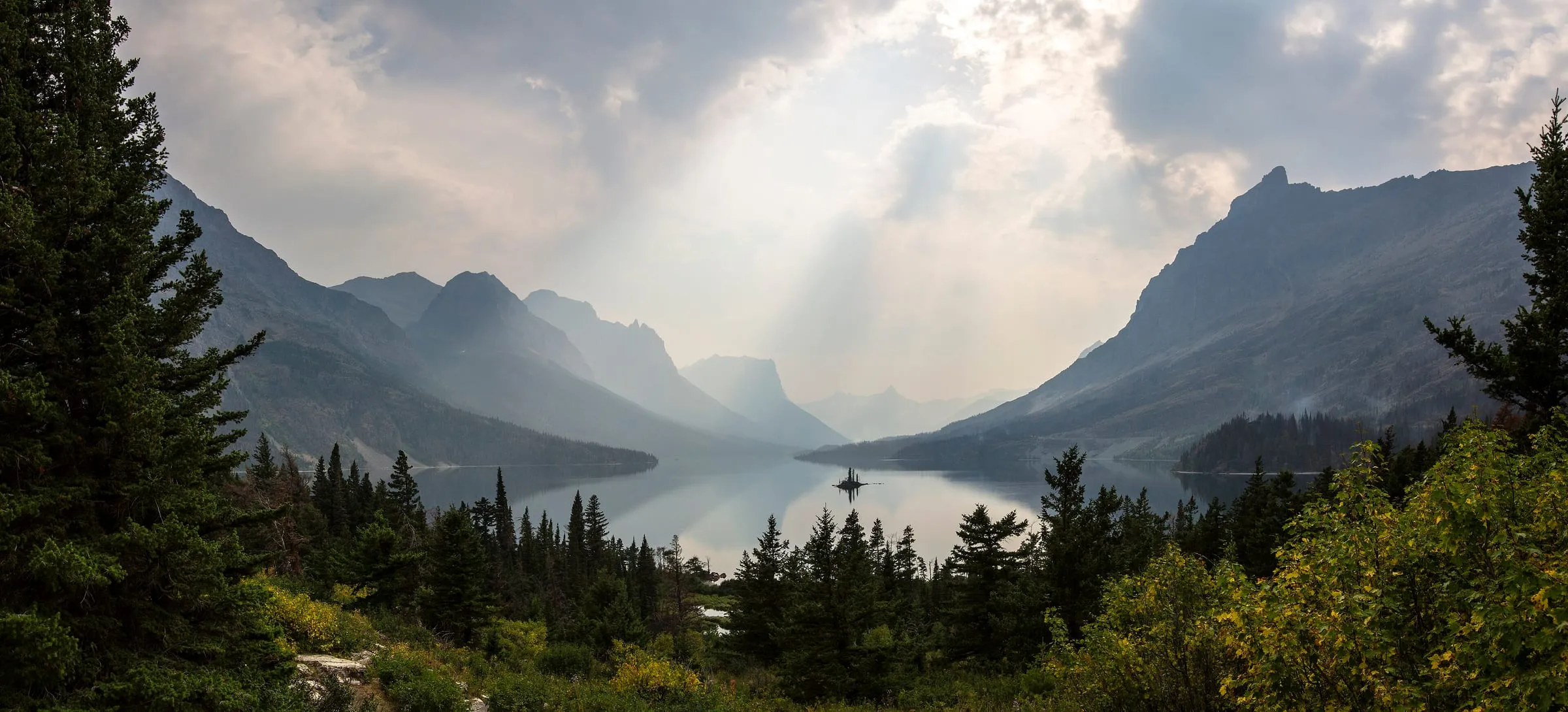
Wildfire smoke is the thing guests worry about most in late summer, and the question we get in August is always the same: "Is it bad there right now?" We can tell you what we see from Woods Bay, but the live sources below tell you more. Here's how to check, and what to do if it's smoky.
How to check smoke and air quality before a Glacier day
We link these instead of copying them: smoke changes by the hour.
- AirNow Fire and Smoke Map: the best single picture of where the smoke is, with monitor readings, fires and smoke plumes. Look at West Glacier, Kalispell and Bigfork.
- Montana DEQ Today's Air: fine-particle (PM2.5) readings from the state's monitors, updated hourly. The address now opens DEQ's air monitoring page, which links the map. DEQ's air quality and smoke page has the smoke forecasts.
- The park's own readings: realtime air monitors at West Glacier and St. Mary, and the webcams, which show you what Lake McDonald and Logan Pass actually look like right now.
- Closures: the park's current conditions and alerts for road and trail closures, InciWeb for active fires, and MDT for state highway closures.
How often does smoke affect a Glacier trip?
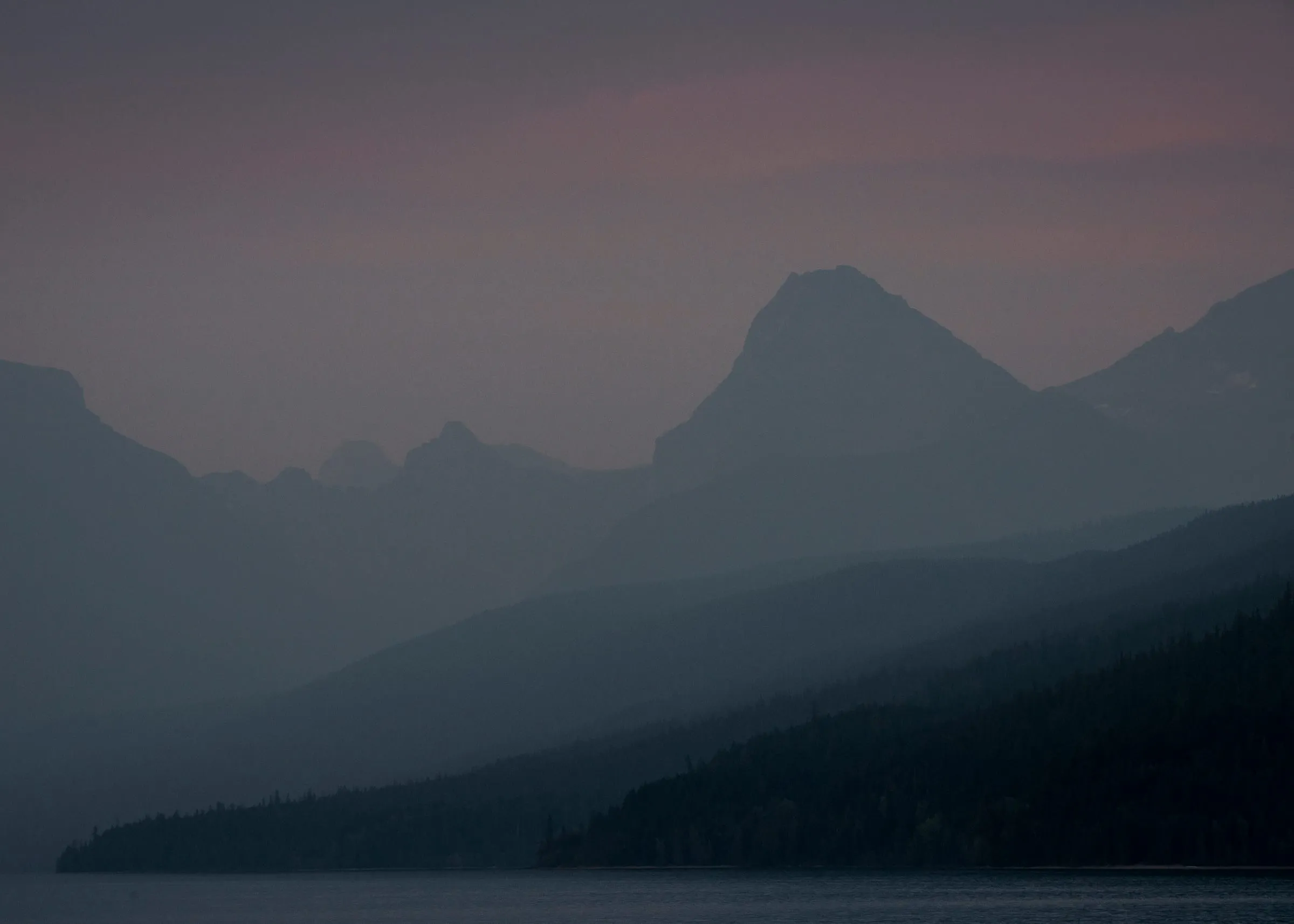
It varies a lot from year to year. The park says wildfires are common each summer in Glacier, and that smoke from fires burning elsewhere, sometimes far away, can bring haze to the park (NPS). In practice, smoky days cluster in August, with some in late July and September.
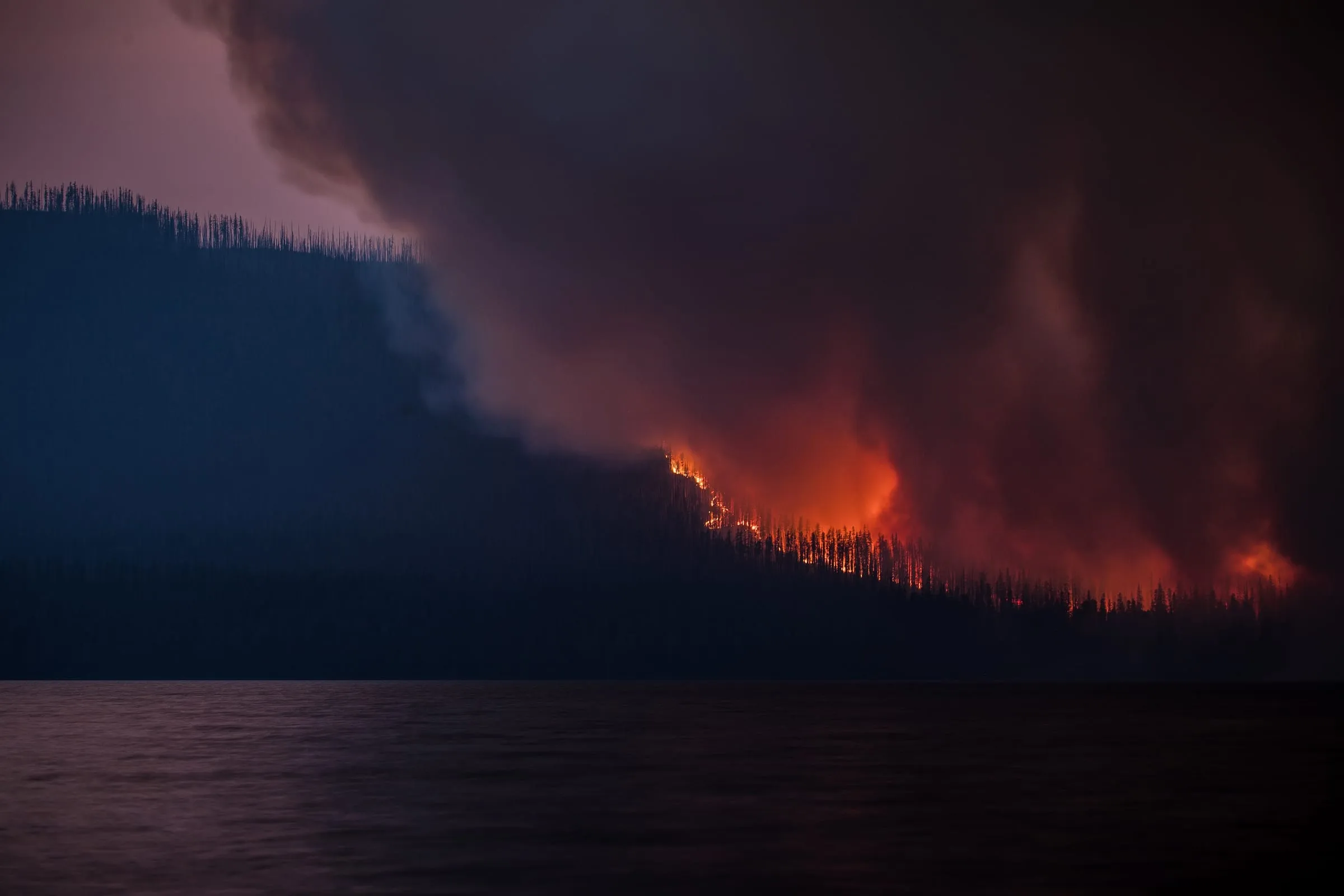
Fires inside the park are rarer, and they can close roads. The 2017 Sprague Fire closed the west side of Going-to-the-Sun Road in early September (NPS). In August 2018, lightning started the Howe Ridge Fire above Lake McDonald.
Most smoke, though, comes from somewhere else. On a satellite image, you can see plumes from fires in British Columbia and Montana drifting a long way. That's why the smoke can thicken or clear overnight even when no fire is nearby.
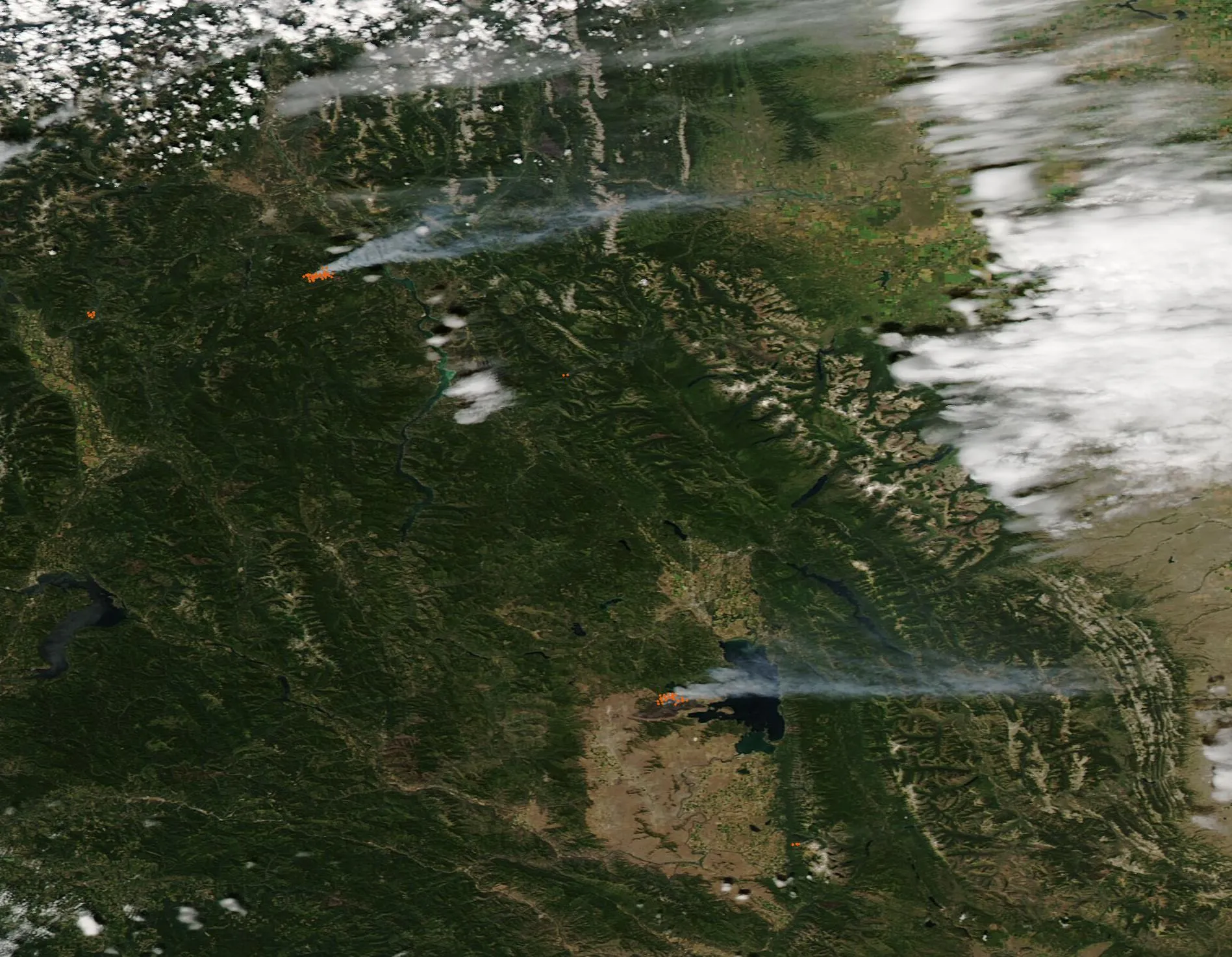
What do you do if there's wildfire smoke during your Glacier trip? A smoky-day plan from the lake
Smoke doesn't stop at the park boundary. On a really heavy day it's in the whole valley, including here. But it usually shifts, so the trick is to stay flexible:
- Swap your days. If tomorrow looks clearer, make today the lake day and move the Sun Road. A park day from here is a big day (44 mi · 50 min to West Glacier, more to Logan Pass), so spend it on the clearest morning you get.
- Check before you leave, not the night before. Smoke can sit in the valleys in the morning and lift by afternoon, or the reverse. Look at the map and the webcams before you get in the car.
- Look east. The two sides of the Continental Divide can have very different weather, and sometimes different smoke. Check the St. Mary monitor and webcams before you write off the day.
- Take it easy. On a heavy day, swap the big hike for a short walk, a slow lunch in Bigfork village (5.5 mi · 11 min), the galleries, or a museum in Kalispell. People with asthma or heart or lung conditions, children and older adults should cut back on hard exercise when the air is unhealthy; AirNow explains the categories.
- The lake still works on a light day. A haze-softened sunset over the water can be beautiful, and a swim off The Sitting Duck's dock, 50 yards from our door, doesn't need a view.
Check the smoke map before you go. If West Glacier is in the red, sleep in, swim, and try the Sun Road tomorrow.
Should you cancel or change your trip?
Smoke forecasts are only useful a day or two ahead, so deciding weeks out is mostly a guess. Most trips get a mix of clear and hazy days. If smoke is a real health concern for someone in your group, think about June, early July or late September, when it's less likely (see our month-by-month guide).
Our cancellation policy: cancel 14 or more days before arrival for a full refund; otherwise the first night (the deposit) is kept. If you're watching the smoke and can't decide, text us and we'll tell you honestly what it looks like out the window.
Planning around the park's other moving parts? See what's known about Glacier reservations in 2027, and our guide to swimming on Flathead Lake.
Questions people also ask
Is Glacier worth visiting if it’s smoky?
Usually, yes. Light haze softens the views but doesn't stop a trip, and smoke often comes and goes within a day or two as the wind shifts. On a heavy day, the mountains can disappear entirely; that's the day to stay low and do something else, and save the Sun Road for when it clears.
When is wildfire smoke season in Glacier?
Mostly August, sometimes from late July into September. The park says wildfires are common each summer, and smoke from fires elsewhere can bring haze even when nothing is burning nearby (NPS). Some summers have hardly any smoky days; others have weeks of them.
Does Glacier close roads or trails because of fire?
Sometimes, near an active fire. In 2017, the Sprague Fire closed the west side of Going-to-the-Sun Road in early September, while Logan Pass stayed open from the east side (NPS). Check the park's current conditions and alerts the morning you go.
How long after rain does the smoke come back?
There's no rule: it depends on whether the fires are still burning and which way the wind blows. Rain or a wind shift can clear the air in hours, and smoke can roll back in the next day. Check the AirNow Fire and Smoke Map morning and evening.
Can I cancel my stay at The Islander because of smoke?
Our cancellation policy: cancel 14 or more days before arrival for a full refund; after that, the first night (the deposit) is kept. Smoke forecasts are only good a day or two ahead, so it's hard to know two weeks out. Text us if you're unsure: we'll tell you what it looks like here.
Keep planning
 Seasonal When is the best time to visit Glacier and Flathead Lake? March to mid-October, month by month: the park, the Sun Road, the lake and the cherries.
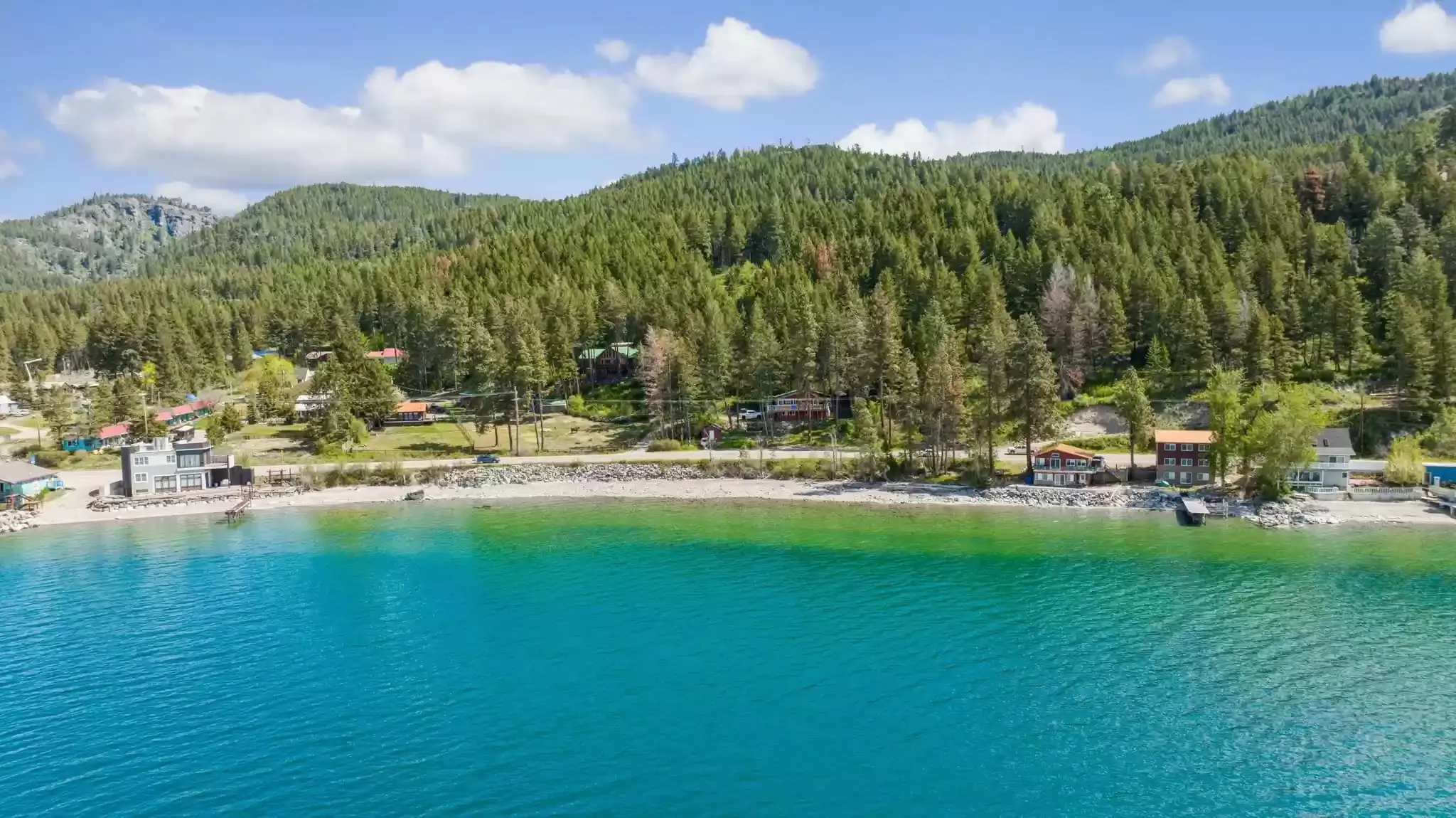 Place guide Where can you swim on Flathead Lake? Beaches, public access and water temperature The east-shore swims near us, what the state parks charge, and how cold the water really is.
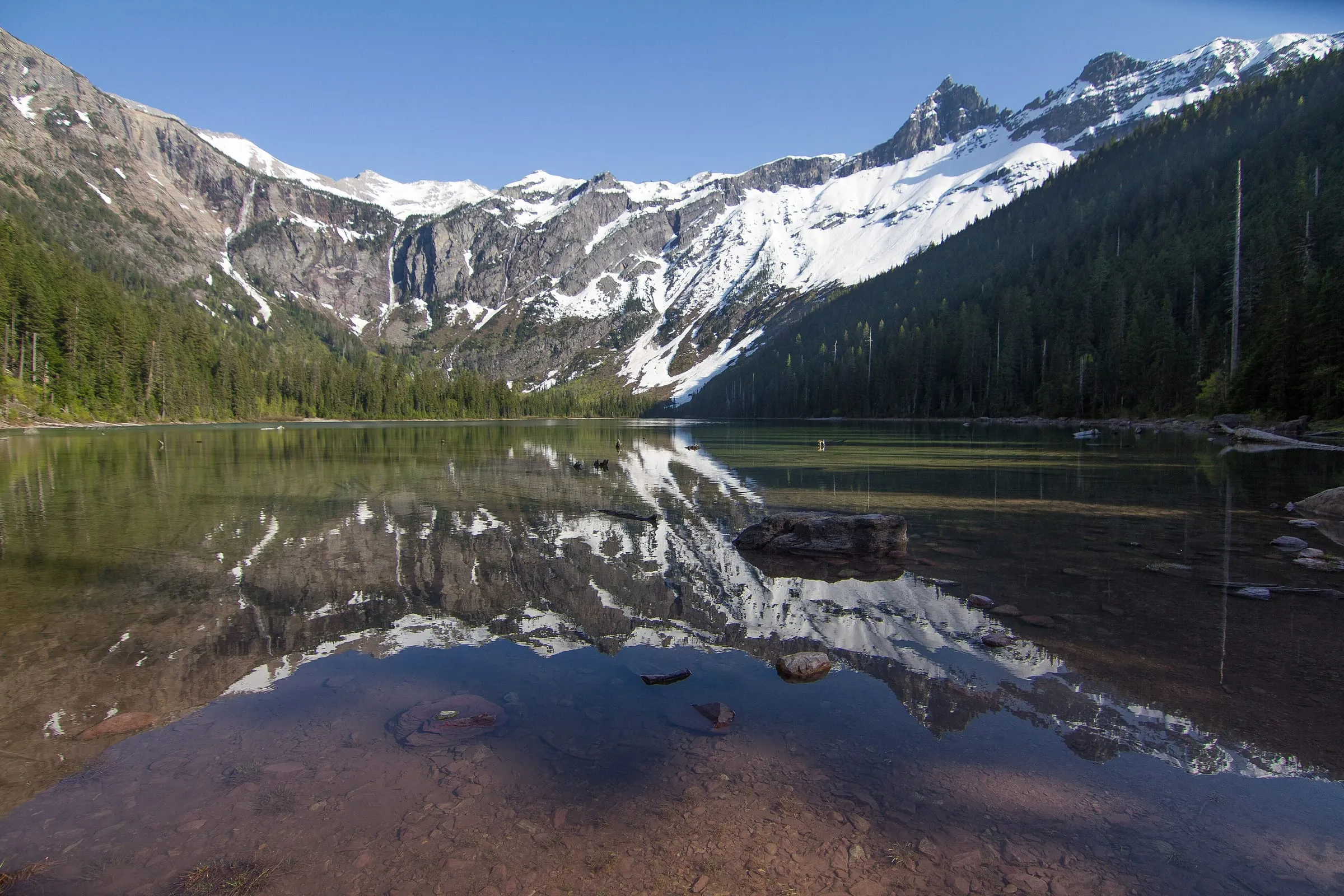 Itinerary What's a good 1-, 2- or 3-day Glacier itinerary if you're staying on Flathead Lake? Park mornings, lake evenings: day-by-day plans with leave times from our door.
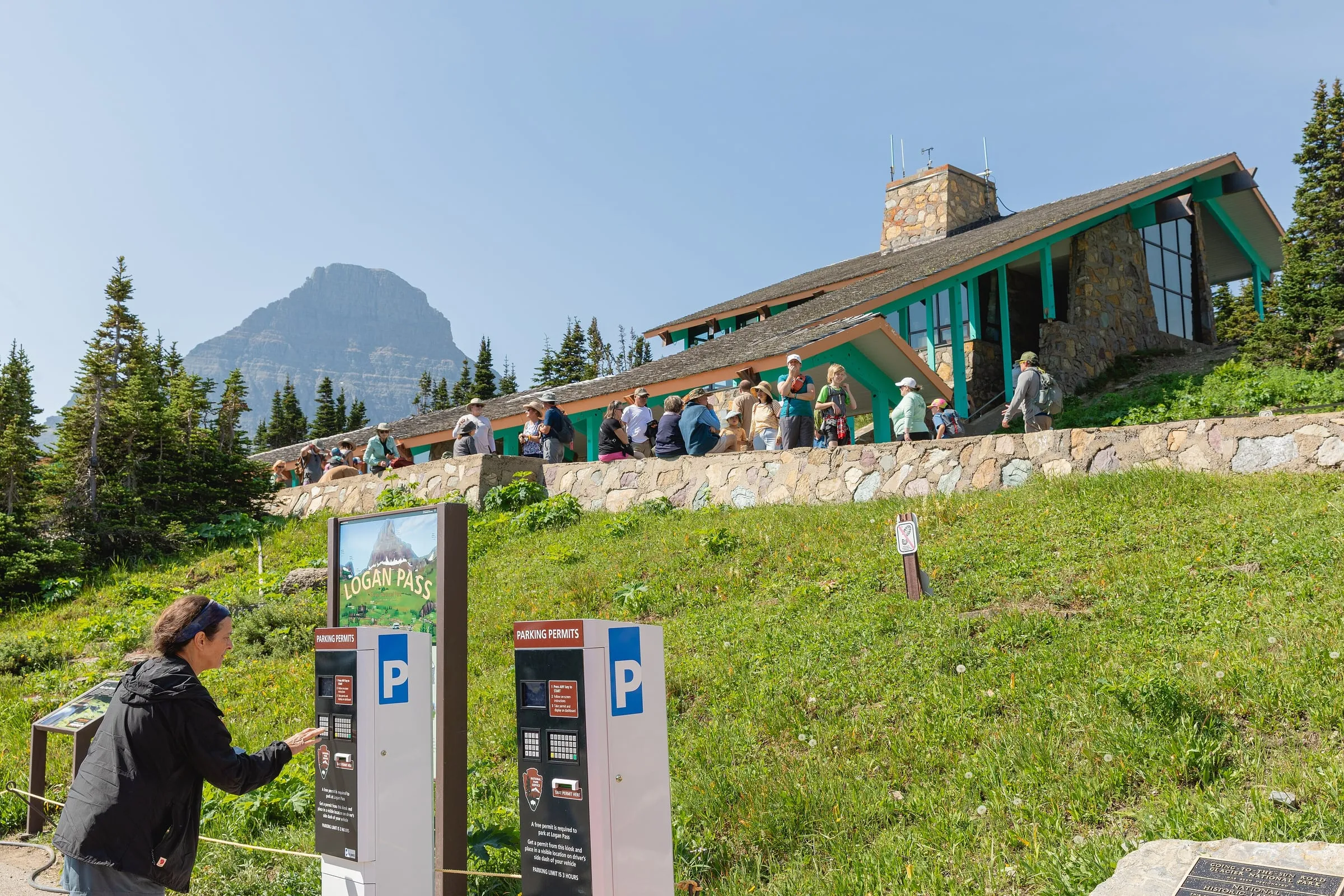 Resource Do you need a reservation for Glacier National Park in 2027? What changed in 2026, what's confirmed for 2027, and how to plan around it.
Sources
- AirNow (EPA and partners): Fire and Smoke Map
- AirNow: air quality by location
- Montana DEQ: Today’s Air (todaysair.mt.gov, now on DEQ’s air monitoring page)
- Montana DEQ: Air quality and smoke (smoke forecasts)
- NPS Glacier: Current conditions and alerts
- NPS Glacier: Current fire information (Sprague Fire 2017, Howe Ridge Fire 2018, realtime air data)
- NPS Glacier: Webcams
- NPS: Logan Pass opening and closing dates (2017 Sprague Fire closure)
- InciWeb: active wildfire incidents
- Montana Department of Transportation: road closures and alerts