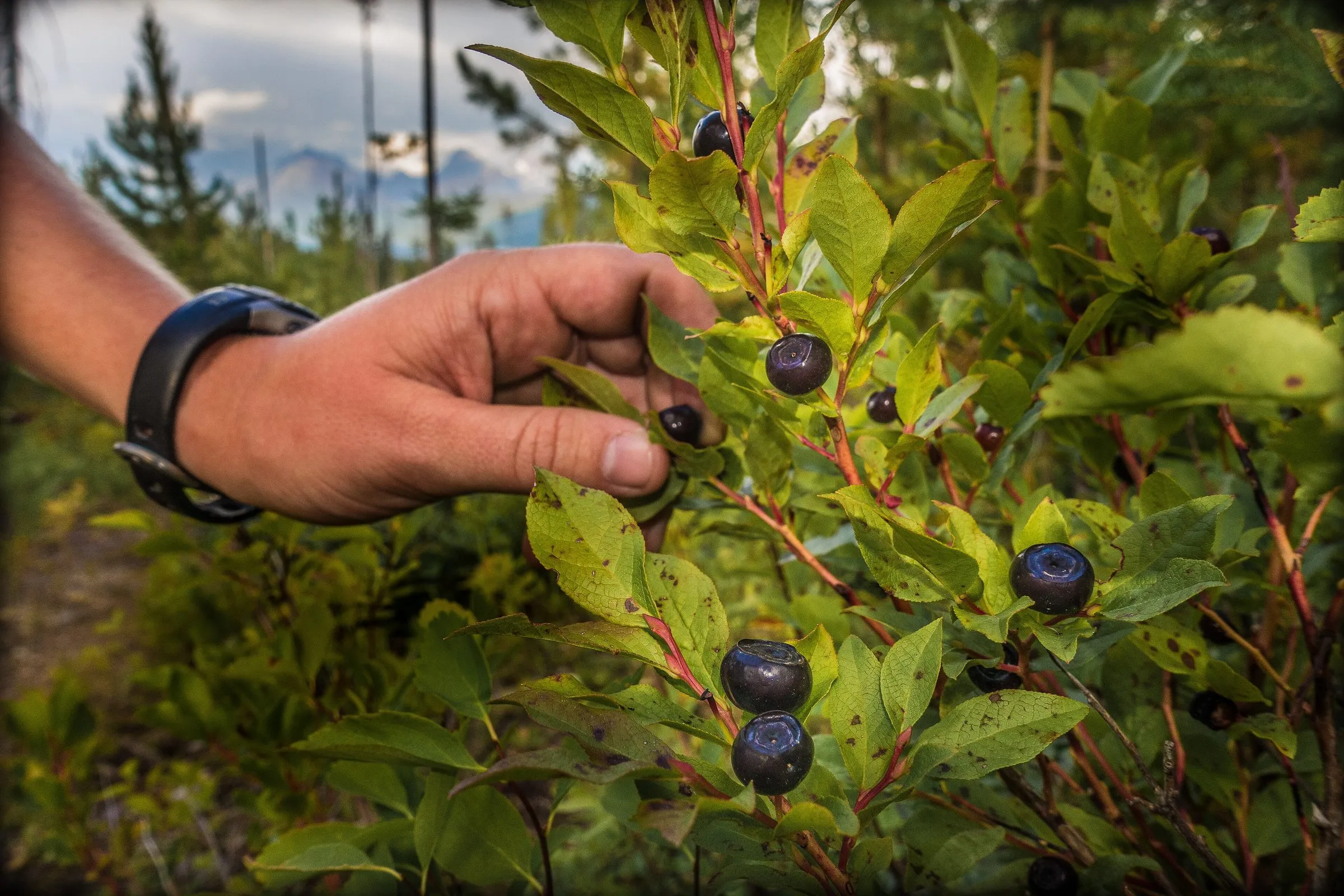
In late July, the whole valley turns purple. Huckleberry shakes, pie, pancakes, lemonade and jam turn up on menus everywhere, and people guard their picking spots like family secrets. Here's when to look, what the rules are, and where to buy them if you'd rather not share a hillside with a bear.
When is huckleberry season near Glacier?
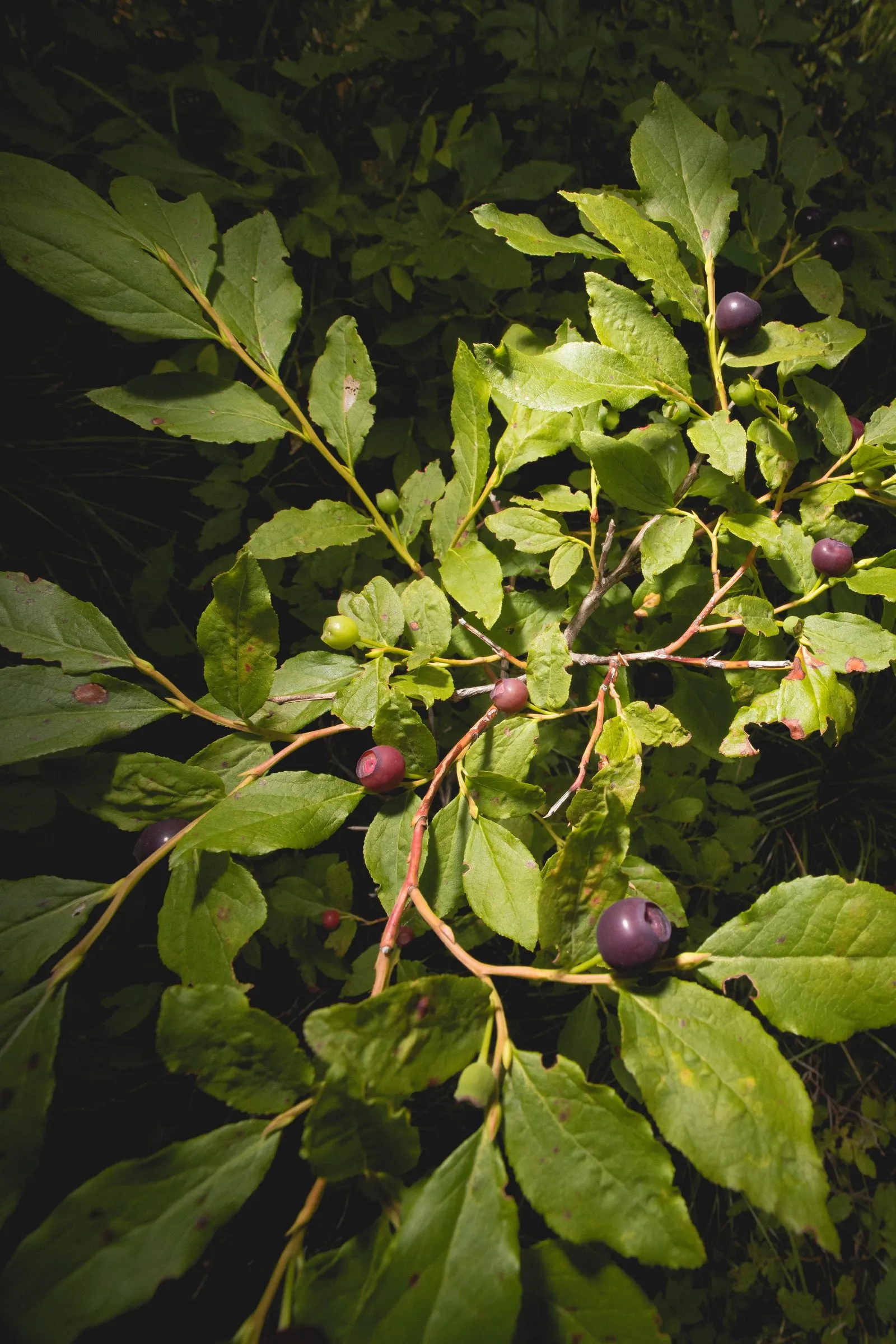
The huckleberry that matters here is the thinleaf huckleberry, a knee-to-waist-high shrub of open forests and old burns. It's the main one Glacier's bears eat, according to the Forest Service's research summary. In Montana it flowers in early June, and in Glacier bears start eating the berries in mid-July at around 3,000 to 4,000 feet.
From there, the season climbs. Low, sunny slopes ripen first. Higher, shadier ones follow through August, and the last berries up high can hang on into September, until frost. A late snowpack pushes everything later, and a hot, dry summer can cut the crop short. The local rule of thumb: when the hand-lettered "huckleberries" signs go up at the roadside stands, the season's on.

The picking rules: Glacier vs. the national forest
The two big public landowners around us have different limits. Both say: by hand, for your own use.
| Where | How much | Rules | Source |
|---|---|---|---|
| Glacier National Park | One quart per person, per day | By hand, for personal use and eating. No bush rakes or other picking tools. No mushroom picking. | NPS compendium, updated July 30, 2026 |
| Flathead National Forest (including the Jewel Basin) | Up to 10 gallons per adult per calendar year, no permit or fee | Personal use only. Picking to sell is commercial harvesting, and no commercial huckleberry permits are offered at this time. | Flathead NF, updated April 23, 2026 |
A quart is about a big yogurt tub, which takes a while to fill with berries this small. Pick the ripe ones and leave the plant whole: the berries are food for bears, birds and other wildlife, which is why the park bans rakes. Private land is private, so stay on public ground. If you have a dog along, remember that dogs can't go on Glacier's trails (see Glacier with a dog).
Close to us, the Jewel Basin Hiking Area in the Flathead National Forest is a popular place to pick: its Camp Misery trailhead is 20 mi · 50 min from our door, the last few miles on gravel. Our Jewel Basin guide has the trails.
Bears and berries
Bears love huckleberries as much as we do, and late summer is when they fatten up for winter. The park's bear safety page asks you to be "extra alert when hiking in obvious feeding areas like berry patches." What that means in practice:
- Make noise. Call out and clap now and then. The park says bear bells aren't enough. Pickers bent over a bush, quiet and happy, are exactly how surprises happen.
- Pick in a group, keep children close, and look up every few minutes.
- Carry bear spray where you can reach it, and know how to use it.
- Give bears room. In Glacier, it's illegal to approach within 100 yards of a bear. If you find one in "your" patch, it's the bear's patch now: leave.
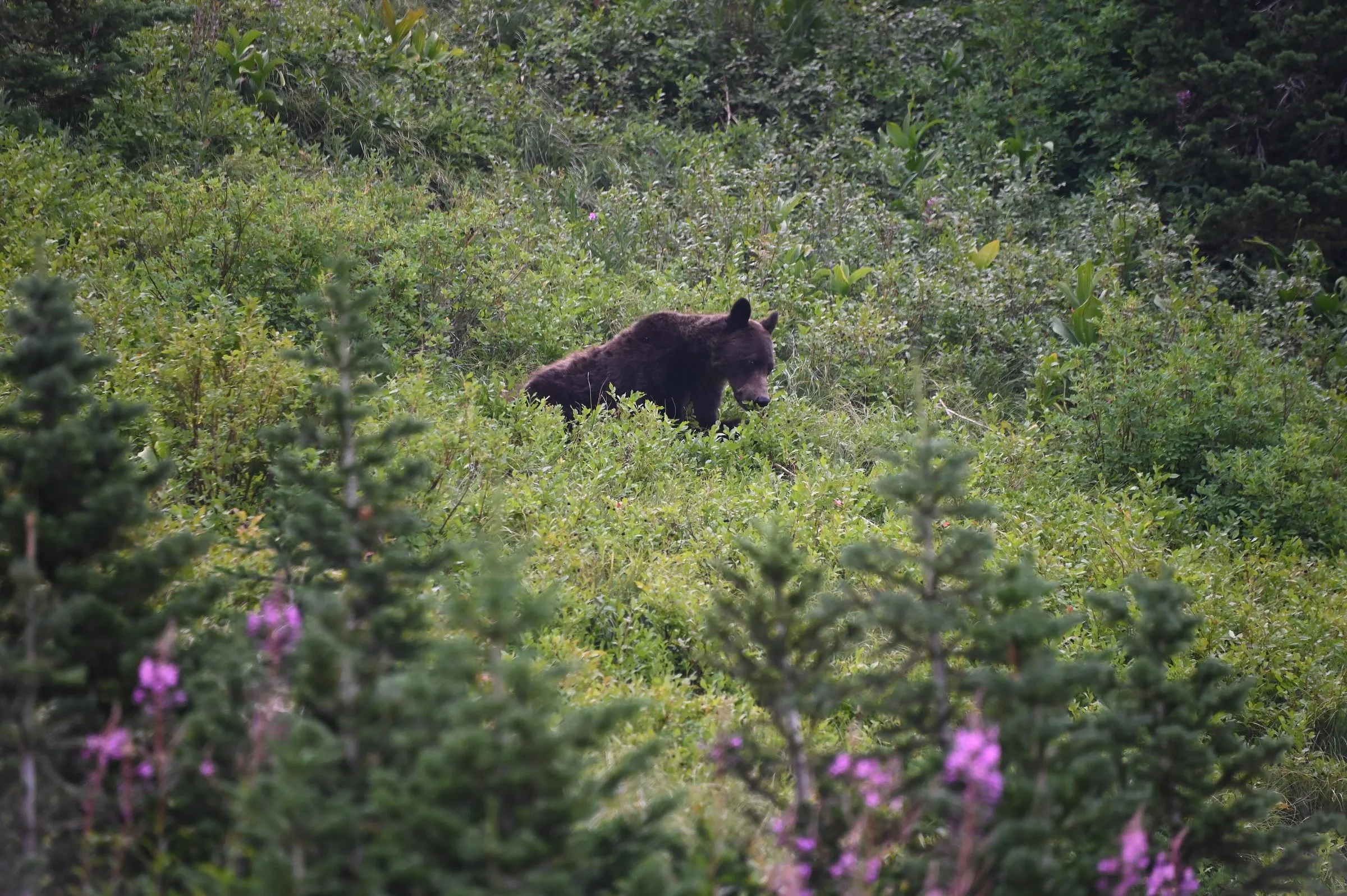
Talk the whole time you're picking. You'll feel silly. The bears will hear you and leave you the bushes.
Where to find huckleberry everything, from Bigfork to the park
In summer, a lot of menus in the valley have something huckleberry on them: shakes, ice cream, pie, pancakes, lemonade, cocktails. These are the shops we send people to, as of what their own sites said on November 6, 2026 (hours change, so check before you go).
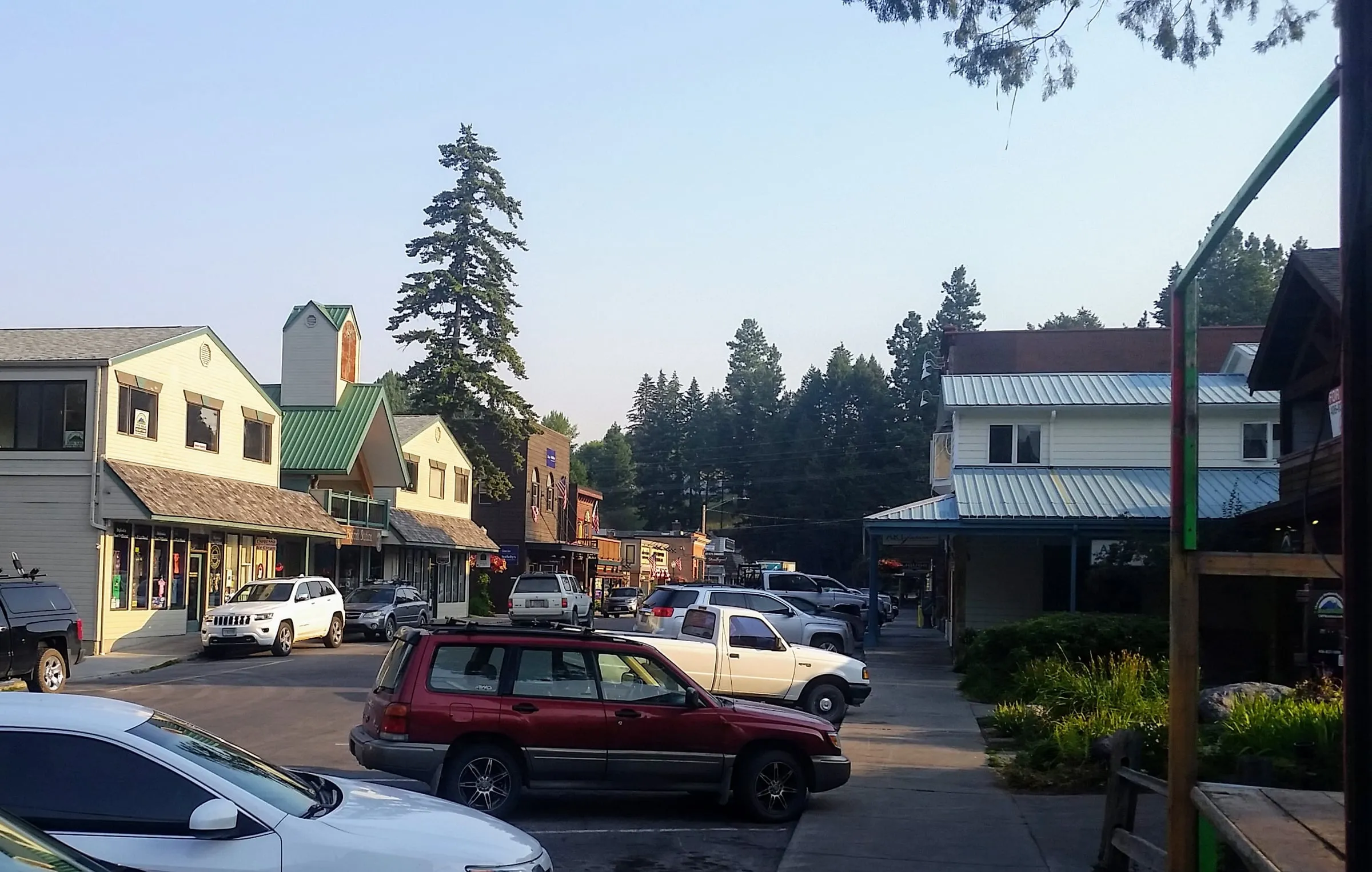
Eva Gates Homemade Preserves
Bigfork village · 5.5 mi · 11 min from us
A family jam kitchen and gift shop at 456 Electric Avenue in Bigfork, making preserves and syrups in small batches since 1949. You can watch the jam being made. Open year-round.
Photo: Erie Bard, CC BY-SA 4.0

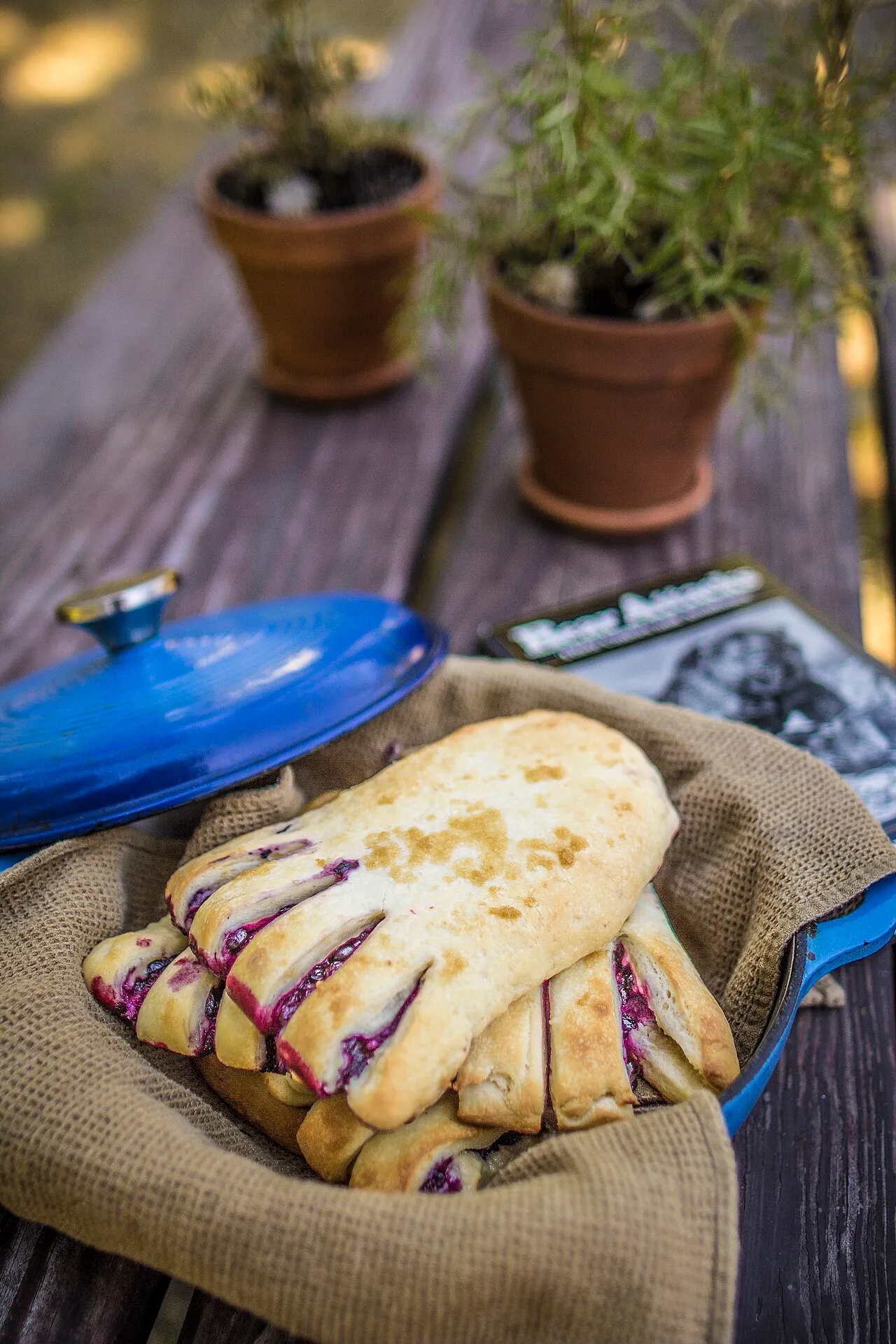
Polebridge Mercantile
Polebridge · 66 mi · 1 hr 55 min from us
The bakery at the end of the North Fork road is famous for its huckleberry bear claws (the photo is an NPS one, not the Merc's). Summer hours are 7 AM to 9 PM; it closes November through March. See our Polebridge guide for the road.
Photo: NPS
On US 2, on the way to the park: The Huckleberry Patch is a huckleberry store, bakery and restaurant at the only stoplight in Hungry Horse (34 mi · 45 min from us), nine miles from the west entrance; its summer hours are 9 AM to 9 PM. A few minutes farther on, Glacier Distilling in Coram, between Hungry Horse and West Glacier, makes Bearproof huckleberry whiskey and a huckleberry cream liqueur. Its tasting room is open daily from noon to 6 PM, and it makes a good stop on a rainy day.
A huckleberry day from Flathead Lake
Pick up jam in Bigfork on the way out, drive US 2 to Hungry Horse for a huckleberry shake, spend the day in the park (Apgar, at the foot of Lake McDonald, is 1 hr 5 min from us), and stop in Coram on the way home. For more on the drive, see how far Bigfork is from Glacier and our itineraries from Flathead Lake. Late July is also when the Flathead cherry stands on Highway 35 are busy; our cherry guide has the timing.
Questions people also ask
Can you pick huckleberries in Glacier National Park?
Yes, by hand and for your own use: the limit is one quart per person per day. Bush rakes and other picking tools aren't allowed, and picking mushrooms is prohibited. That's from the park's Superintendent's Compendium (last updated July 30, 2026).
Do you need a permit to pick huckleberries in the Flathead National Forest?
Not for personal use up to 10 gallons per adult per calendar year. Anything you plan to sell counts as commercial harvesting, and the forest isn't offering commercial huckleberry permits at this time. Source: Flathead National Forest (last updated April 23, 2026).
What month are huckleberries ripe in Montana?
Usually from mid-July at lower elevations, and later the higher you go, through August and sometimes into September. It shifts every year with the snowpack, heat and rain. In Glacier, bears start eating them in mid-July at about 3,000 to 4,000 feet, according to the Forest Service's research summary.
Can you buy fresh huckleberries?
In season, yes: fresh-picked berries show up at roadside stands and markets in late July and August, and they go fast. Huckleberry jam, syrup and candy are easier, and you can find them all year. Eva Gates in Bigfork, for one, is open year-round.
What is the difference between a huckleberry and a blueberry?
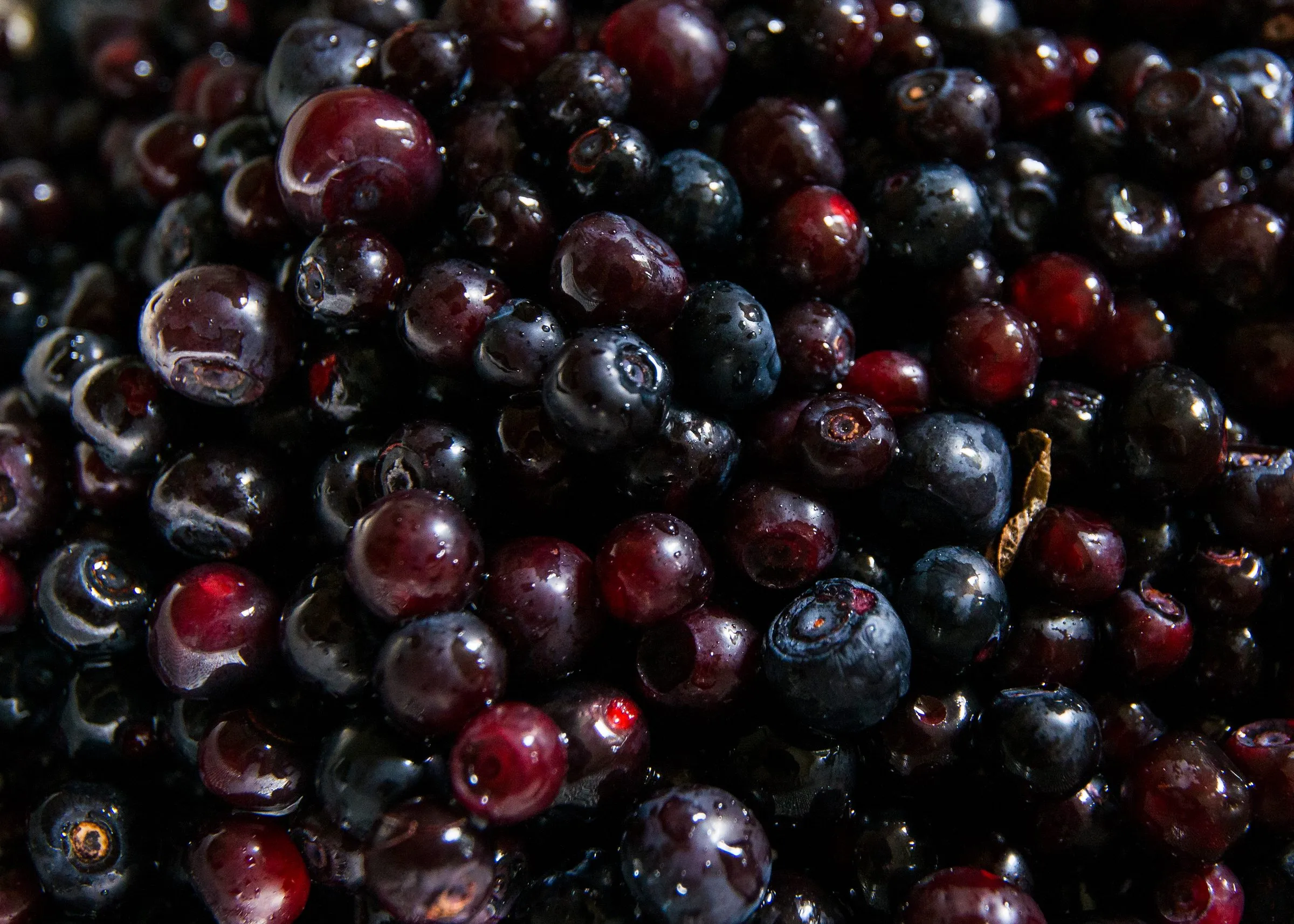
They're cousins in the same plant genus. Montana's huckleberries are wild: smaller, darker and more tart than a grocery-store blueberry, with a stronger flavor. They're picked by hand on mountain slopes rather than grown on farms, which is why they cost so much.
Keep planning
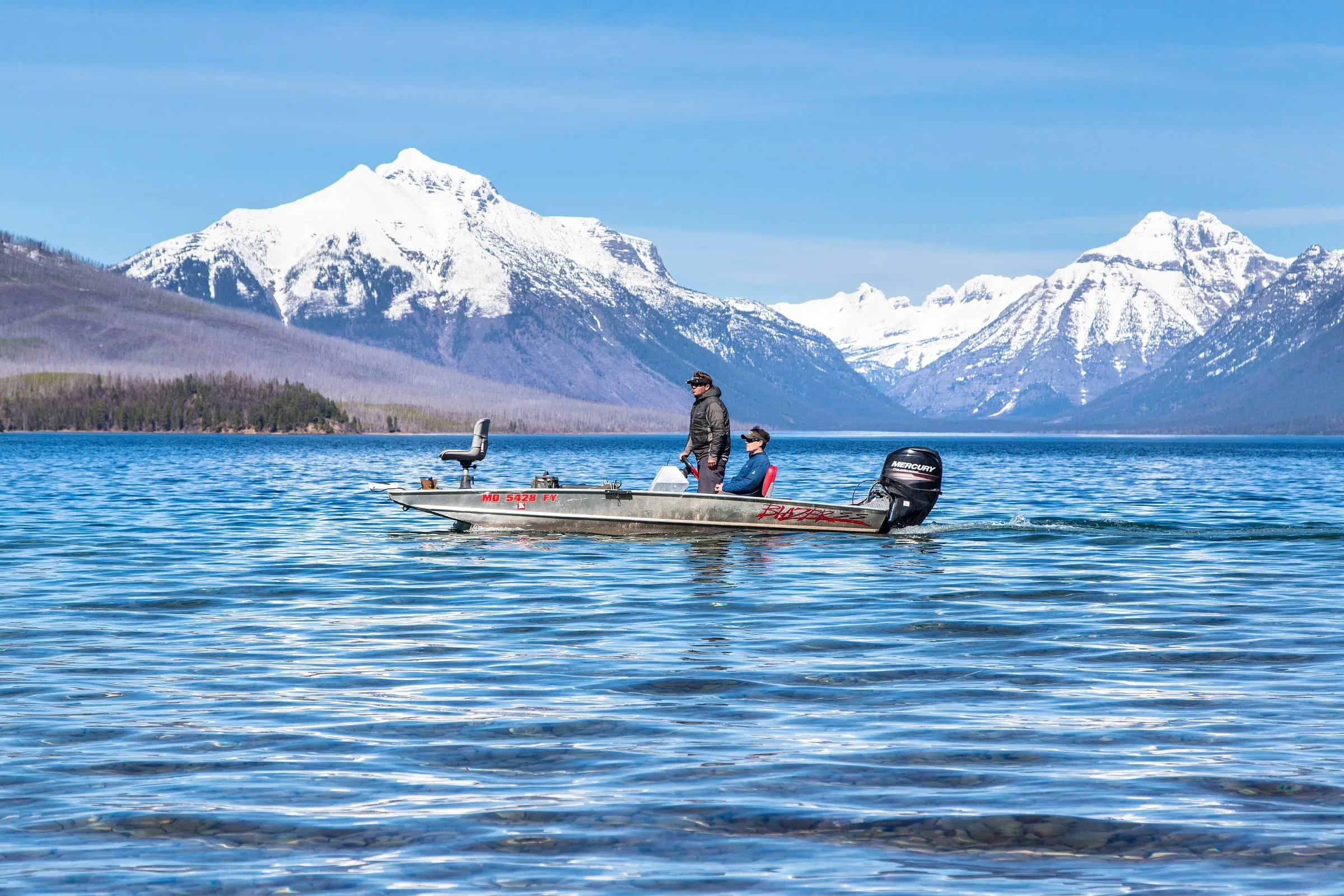 Seasonal When is the best time to visit Glacier and Flathead Lake? March to mid-October, month by month: the park, the Sun Road, the lake and the cherries.
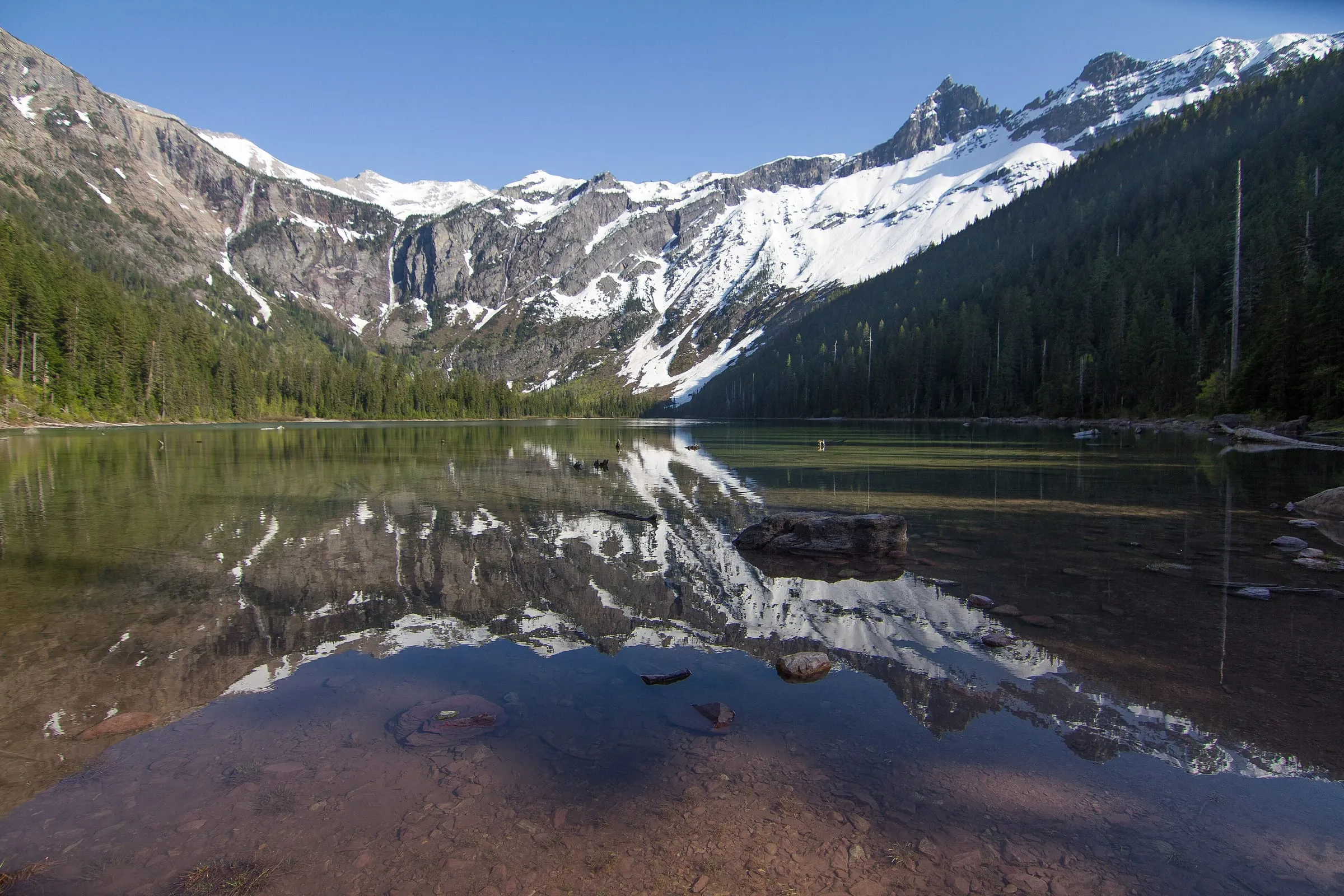 Itinerary What's a good 1-, 2- or 3-day Glacier itinerary if you're staying on Flathead Lake? Park mornings, lake evenings: day-by-day plans with leave times from our door.
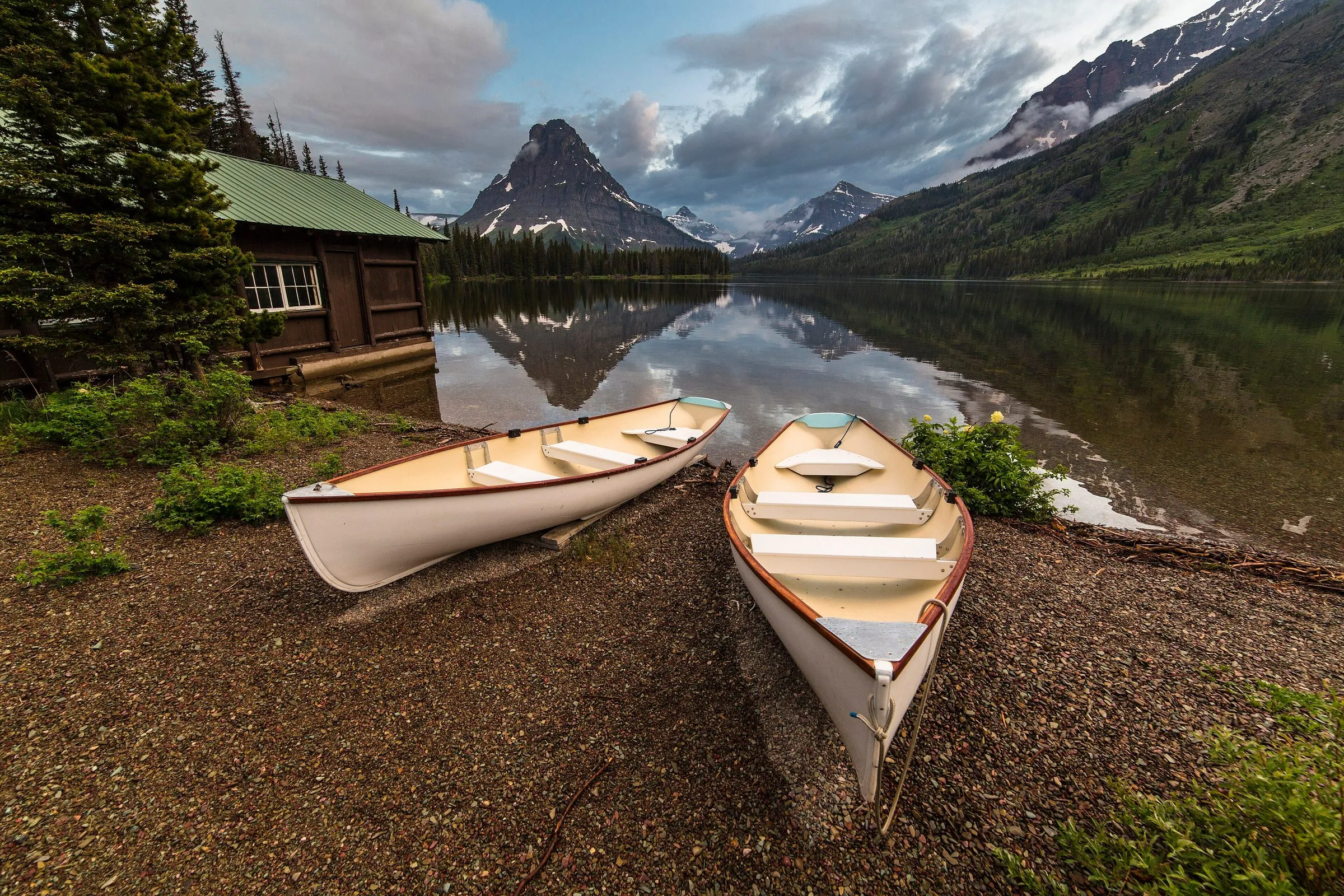 Q&A How far is Bigfork / Woods Bay from Glacier National Park? One checked table from our door to every entrance, lodge, airport and town.
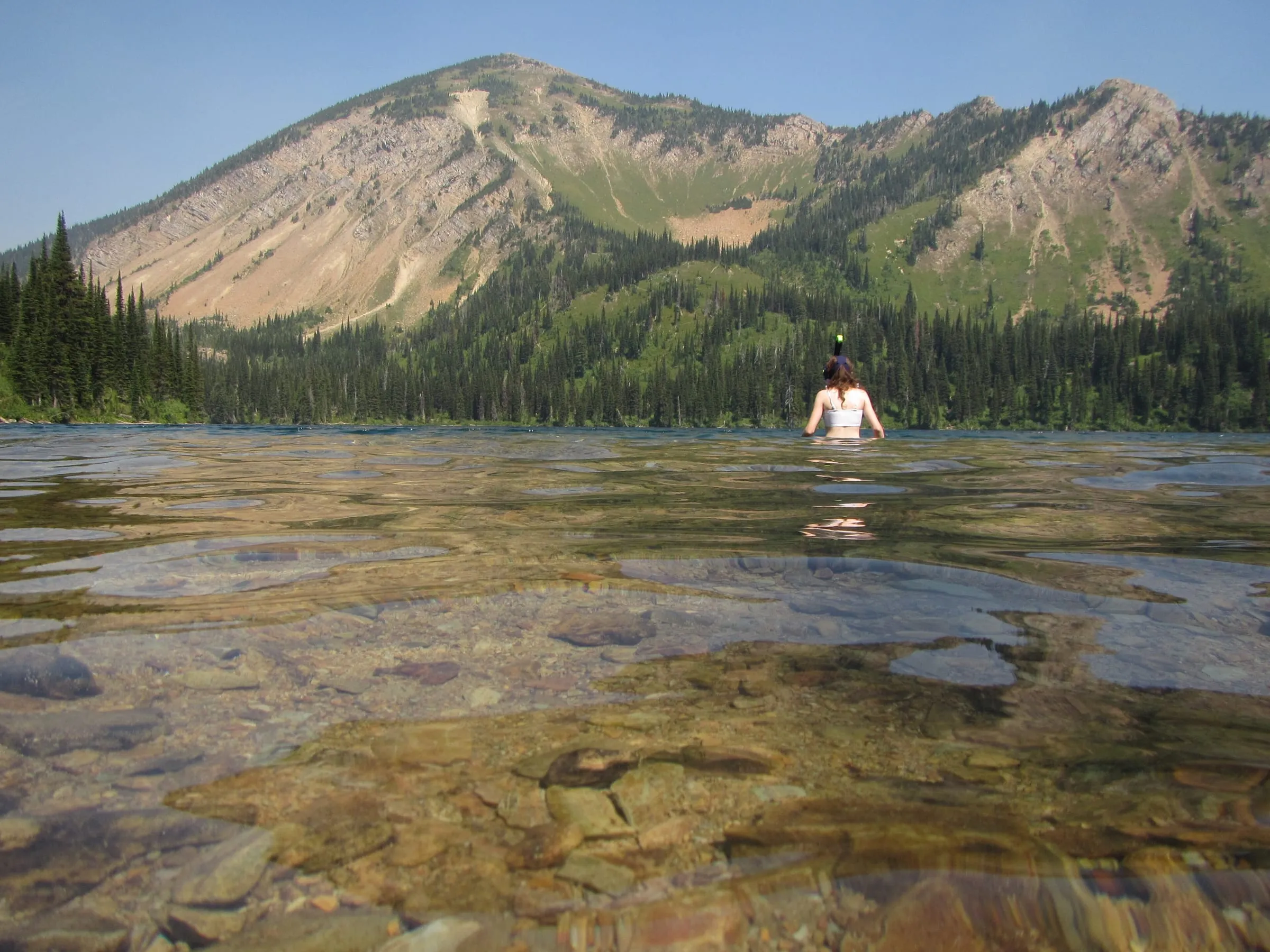 Place guide What are the best Jewel Basin hikes from Bigfork? Three hikes from Camp Misery, the steep gravel road up, and why it's the dog-friendly alternative to the park.
Sources
- NPS: Glacier Superintendent’s Compendium, 2.1(c)(1), berries (last updated July 30, 2026), checked November 6, 2026
- USDA Forest Service: Flathead National Forest, non-wood forest products (huckleberry limits, last updated April 23, 2026)
- USDA Forest Service, Fire Effects Information System: thinleaf huckleberry (Vaccinium membranaceum)
- NPS: Bear safety in Glacier (last updated May 14, 2026)
- Eva Gates Homemade Preserves, Bigfork
- The Huckleberry Patch, Hungry Horse
- Glacier Distilling, Coram
- Polebridge Mercantile & Bakery
- Drive times: OpenStreetMap routing (OSRM), checked November 6, 2026